
Kyphosis vs Lordosis vs Scoliosis in Dogs: Differences Explained

Dogs can develop spinal abnormalities just like humans. While many dog owners are familiar with conditions like hip dysplasia or arthritis, conditions affecting the spine — specifically kyphosis, lordosis, and scoliosis — are less often discussed but just as important. These spinal deviations affect posture, gait, and overall quality of life.
Understanding the differences between these three conditions can help dog owners spot early signs, work with their veterinarian for an accurate diagnosis, and find the right treatment or support options.
On this page, we will explain what kyphosis, lordosis, and scoliosis mean in dogs, how to recognize the signs, what causes these spinal issues, and how to manage them effectively.
What is kyphosis in dogs?
Kyphosis is a spinal condition where the dog's spine curves outward, creating an abnormal hump along the back. In a healthy dog, the spine has a natural shape that supports efficient movement. In dogs with kyphosis, the upper back arches excessively, which can interfere with mobility and may indicate an underlying musculoskeletal or neurological issue.
Common signs of kyphosis
-
Visible arch or hump in the upper back
-
Shortened stride or altered gait
-
Difficulty jumping or climbing stairs
-
Muscle wasting along the spine
-
Discomfort when touched along the back
Causes of kyphosis
Kyphosis can be caused by a number of factors:
-
Congenital deformities present at birth, especially in breeds with short or compact bodies like French Bulldogs and Pugs
-
Vertebral malformations such as hemivertebrae or wedge-shaped vertebrae
-
Degenerative diseases including intervertebral disc disease (IVDD)
-
Neurological issues that affect posture and muscle control
In growing puppies, kyphosis may appear temporarily but usually resolves. When it persists or worsens, veterinary evaluation is essential.
What is lordosis in dogs?
Lordosis is a condition where the spine curves inward excessively in the lower back, near the lumbar region. This creates a "swayback" appearance, where the dog's lower spine dips more than normal. While a slight inward curve is normal in all dogs, lordosis refers to an exaggerated curvature that may signal a structural or muscular imbalance.
Signs and symptoms of lordosis
-
Noticeable dip in the lower back
-
Weakness in the hind limbs
-
Hesitation when running, playing, or jumping
-
Swaying motion when walking
-
Difficulty rising from a lying position
What causes lordosis in dogs?
Lordosis is less common than kyphosis but can result from:
-
Muscle weakness or poor core muscle development
-
Congenital spinal deformities
-
Spinal injuries or trauma
-
Neuromuscular disorders that affect posture
-
Old age, which can lead to postural compensation
It may also develop in dogs who have suffered an earlier spinal trauma, causing changes in spinal alignment during healing.
What is scoliosis in dogs?
Scoliosis refers to an abnormal sideways curvature of the spine. Unlike kyphosis and lordosis, which affect the spine's vertical shape, scoliosis causes the spine to bend left or right. This condition can affect one part of the spine or the entire spinal column and can range from mild to severe.
How to recognize scoliosis in dogs
-
Spine visibly curves to the side
-
Asymmetrical body posture
-
Shoulder or hip height appears uneven
-
Dog may favor one side while walking
-
Uneven muscle development on either side of the body
Causes of scoliosis in dogs
-
Congenital vertebral malformations
-
Spinal trauma or surgery
-
Neurological disorders such as syringomyelia or muscular dystrophy
-
Infections or inflammation in spinal tissues
-
Tumors affecting the spinal cord or vertebrae
Scoliosis is often diagnosed during puppyhood, but in some cases, it can be acquired later due to trauma or degenerative disease.
How are spinal curvatures in dogs diagnosed?
Early recognition of spinal abnormalities is important, but an accurate diagnosis requires veterinary evaluation. If you notice any unusual curvature in your dog’s spine, mobility changes, or signs of discomfort, schedule a veterinary appointment.
Diagnostic tools commonly used:
-
Physical examination to assess posture, gait, and pain response
-
X-rays to visualize spinal curvature and vertebral shape
-
MRI or CT scans if soft tissue or spinal cord involvement is suspected
-
Neurological exams to determine nerve involvement or function
In some cases, advanced imaging may be needed to rule out underlying causes such as tumors or intervertebral disc disease.
What breeds are most at risk?
While any dog can develop spinal curvature disorders, certain breeds are more prone due to their skeletal structure or genetic predispositions.
Breeds with higher risk:
-
French Bulldogs
-
English Bulldogs
-
Pugs
-
Boston Terriers
-
Chihuahuas
-
Dachshunds
-
Shih Tzus
-
Yorkshire Terriers
These breeds often have a higher incidence of congenital vertebral malformations such as hemivertebrae or block vertebrae, making them more likely to develop kyphosis or scoliosis.
Can kyphosis, lordosis, or scoliosis in dogs be treated?
Treatment depends on the severity of the condition, whether it is causing pain or mobility issues, and if it is worsening over time.
Conservative management:
-
Physical therapy to build core strength and improve posture
-
Anti-inflammatory medications to manage discomfort
-
Supplements such as glucosamine for joint support
-
Custom orthotics in mild cases
Surgical intervention:
In severe cases, especially when spinal cord compression is present, surgery may be considered. This is typically reserved for dogs with worsening neurological signs or severe deformity.
When do dogs with spinal curvature need mobility support?
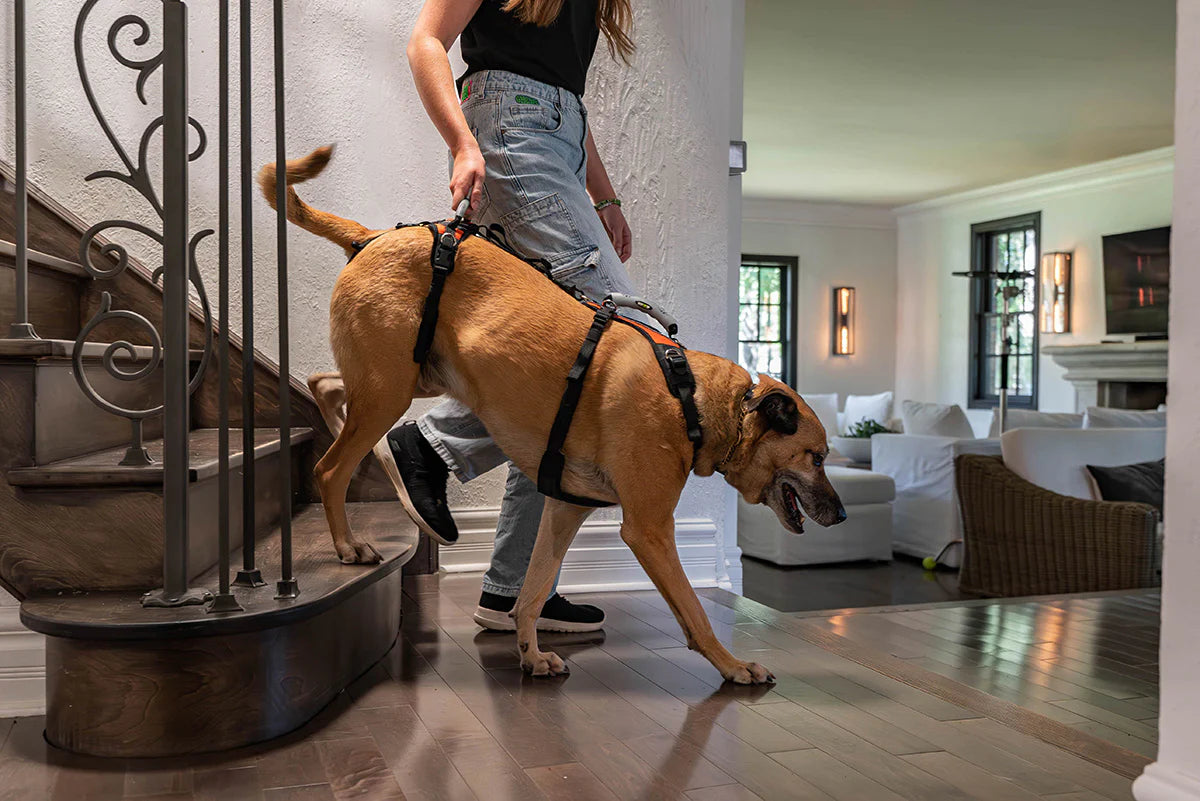
Dogs with moderate to severe kyphosis, lordosis, or scoliosis may benefit greatly from mobility aids, especially when their ability to walk or support weight is affected. This is especially true if neurological involvement is causing partial paralysis or hind limb weakness.
How custom wheelchairs help:
At K9 Carts, we design custom-built wheelchairs specifically adapted to each dog’s spinal alignment and mobility needs. For dogs with scoliosis or kyphosis, this customization is critical to prevent pressure points, support proper alignment, and allow the dog to move comfortably. A one-size-fits-all approach often leads to further complications in dogs with spinal curvatures. That’s why a tailored design, guided by veterinary input, makes a long-term difference.
In dogs with lordosis or lower back weakness, a rear-support wheelchair can help stabilize the spine and take strain off the hips and legs. For dogs with more complex spinal deformities, a quad (four-wheel) wheelchair may offer the best support.
How to support dogs living with spinal curvatures
Caring for a dog with a spinal condition is a long-term commitment, but with the right care, many dogs continue to live active, happy lives.
Tips for supportive care:
-
Keep your dog at a healthy weight to reduce spinal strain
-
Use orthopedic bedding to cushion joints and promote proper spine alignment
-
Avoid high-impact activities like jumping or sudden twisting
-
Monitor for changes in gait, posture, or comfort
-
Incorporate gentle strengthening exercises approved by your vet
-
Consider a mobility wheelchair to improve independence and quality of life
Frequently Asked Questions
What is the difference between kyphosis, lordosis, and scoliosis in dogs?
Kyphosis, lordosis, and scoliosis are three distinct types of spinal curvature abnormalities in dogs.
Kyphosis is an outward curve of the upper spine, creating a rounded or hunched back. Lordosis refers to an inward curvature of the lower spine, producing a swayback appearance. Scoliosis involves a sideways curve, where the spine bends left or right.
Each condition affects posture and mobility differently and may require specific treatment or support, depending on severity and underlying cause.
Can dogs live a normal life with kyphosis, lordosis, or scoliosis?
Yes, many dogs with spinal curvature conditions can live a full and active life, especially with early diagnosis and proper management. Treatment options vary depending on the condition's severity but may include physical therapy, medication, lifestyle modifications, and custom mobility support.
Dogs with more advanced cases may benefit from a custom-built dog wheelchair that aligns with their spinal curve, helping them stay mobile and comfortable. Regular veterinary monitoring is essential to maintain quality of life.
What are the early signs of scoliosis, kyphosis, or lordosis in dogs?
Early signs may include changes in posture, such as an arched back (kyphosis), a dipped lower spine (lordosis), or a sideways spinal curve (scoliosis). Dogs might also show signs of stiffness, uneven muscle development, difficulty walking or running, and a reluctance to jump or climb stairs.
Some dogs may display a swaying gait or appear to favor one side. If you notice these symptoms, a veterinary exam is important to determine the cause and begin treatment if needed.
How are spinal curvature conditions in dogs diagnosed by veterinarians?
Veterinarians typically start with a physical examination to assess posture, gait, and discomfort. Diagnostic imaging, including X-rays, is used to confirm the type and extent of spinal curvature.
In more complex cases, MRI or CT scans may be recommended to evaluate spinal cord involvement or rule out conditions such as tumors or intervertebral disc disease. A neurological exam might also be performed if nerve function is affected. Accurate diagnosis helps guide effective treatment planning.
Are certain dog breeds more prone to kyphosis, scoliosis, or lordosis?
Yes, certain breeds have a higher risk of developing spinal curvature disorders, particularly those with short or compact bodies. Breeds prone to congenital vertebral malformations include French Bulldogs, English Bulldogs, Pugs, Boston Terriers, Chihuahuas, and Dachshunds.
These structural traits can make spinal abnormalities more common, especially in puppies. Regular veterinary checkups are important in at-risk breeds to detect spinal issues early and begin management before symptoms worsen.
What are the treatment options for dogs with spinal curvature disorders?
Treatment depends on the type and severity of the curvature. Mild cases may only require monitoring, physical therapy, or lifestyle adjustments. Moderate cases often benefit from anti-inflammatory medications, muscle-strengthening exercises, and custom support equipment.
Severe cases, especially those causing pain or nerve issues, might require surgical correction. Mobility aids such as custom dog wheelchairs can provide essential support for dogs with difficulty walking, helping them stay active and independent while minimizing strain on the spine.
Can spinal curvature in dogs worsen over time if left untreated?
Yes, spinal abnormalities such as kyphosis, scoliosis, or lordosis can worsen over time, especially if they are linked to underlying neurological or orthopedic conditions. As the spine continues to curve abnormally, the dog may experience increasing discomfort, reduced mobility, and muscle imbalance.
Without treatment or supportive care, the condition can lead to further complications such as joint stress, arthritis, or nerve damage. Early intervention with veterinary care and mobility support can help slow progression and maintain function.
Is surgery necessary for dogs with kyphosis, lordosis, or scoliosis?
Surgery is not always necessary and is usually reserved for severe cases that involve spinal cord compression, pain, or progressive neurological symptoms. Many dogs with mild to moderate curvature respond well to conservative treatments like physical therapy, medication, and mobility aids.
A veterinary neurologist or orthopedic specialist may recommend surgery if the curvature poses a significant risk to the dog’s health or quality of life. Each case should be evaluated individually to determine the best course of action.
References
Share this
Featured product
Popular posts


