


Resources

K9 Carts 2019 Annual Veterinary Medicine Scholarship Winner
Since the mid-1970s, K9 Carts has been serving mobility impaired pets and their owners. We have been looking to inspire the next generation of animal lovers by sponsoring a micro-scholarship for students entering the field of Veterinary Medicine.
We are proud to announce the winner of our 2019 Annual Veterinary Medicine Scholarship, Lilly Beaman. For her entire life Lilly has devoted her free time to helping pets in need. Her heartwarming video is an inspiration that we are all capable of helping, whether it's your time, money, or spreading the word. We can all make a difference.
How to Tell If Your Paralyzed Dog is Happy
Caring for a sick canine can be incredibly emotionally painful, particularly when that sickness seems to impact the dog’s quality of life. How can you tell whether or not a dog is really happy?
At K9 Carts, we’ve made it our mission to help pets struggling with mobility issues. Paralysis is one such issue that can drastically affect a pet’s daily activities. Some pet parents view paralysis as a tipping of the scales, a point at which their dog can no longer enjoy life. But that isn’t necessarily true.
So, what is the truth? Can a paralyzed dog live a happy life? The short answer—it depends on the dog’s individual condition and unique health needs. Overall, it’s very possible for a paralyzed or partially paralyzed dog to continue to live a full, happy life.
Mobility aids like dog wheel chairs and handheld slings can allow paralyzed canines to regain mobility, improving their mood, returning their independence, and ultimately giving them a new lease on life! Let’s dive deeper into the potential quality of life of paralyzed dogs.
Causes and Severity of Paralysis in Dogs
Certain diseases and health conditions can lead to different levels and severity of paralysis in canines. Sometimes, a dog may slowly lose the use of her back legs, eventually resorting to dragging herself around using her front limbs. That dog just wants to move, but this can cause further damage to the spine and back legs. Other illnesses may result in total limb weakness, leaving your dog completely incapable of moving around on her own.
Here are a few causes of paralysis in dogs:
Degenerative myelopathy (DM)
Intervertebral disc disease (IVDD)
Cancerous tumors affecting the spine or brain
Tick paralysis
Spinal trauma
Canine distemper
Is My Paralyzed Dog Happy?
Loss of mobility can lead to depression and further health issues for your pup, such as obesity. Before making any difficult decisions, you should consult your vet to fully understand your dog’s condition, as well as to agree on a treatment plan.
Depending on the cause of paralysis, your canine may respond to rehabilitation, remain stable, or continue to lose the use of his limbs. To understand your dog’s current lifestyle and level of happiness, it can be helpful to monitor his behavior and compare it to how he acted when he was fully mobile. Ask yourself questions like:
Does my dog eat an appropriate amount?
Is he energized or lethargic?
Does he still show interest in playing or going for walks?
Is he experiencing discomfort or pain?
Does he appear alert?
Is he acting like his “usual self,” or does he seem “off?”
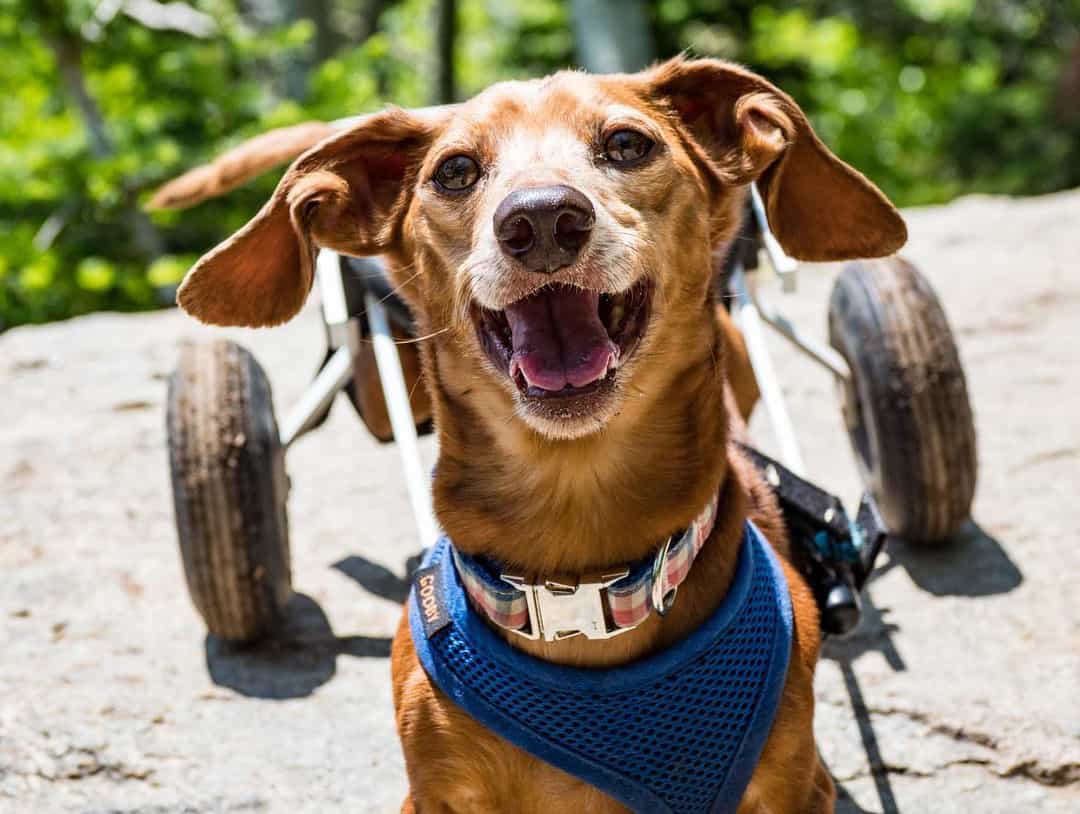
Often, paralyzed or partially paralyzed dogs are still perfectly capable of living a comfortable, happy life. They continue to show interest in playing, they’re alert and excited when they see you, and they maintain a healthy appetite.
If your vet verifies that your dog isn’t in pain and he’s just having trouble getting around, it’s time to look into mobility aids that can expand your dog’s range of motion and allow him to continue to enjoy life by your side.
Wheelchairs for Paralyzed Dogs
With a few lifestyle changes, most paralyzed dog can regain some or full mobility. This can drastically improve their happiness—and yours, too! At K9 Carts, we create customized carts for paralyzed dogs and other pets experiencing partial and full limb weakness. If your dog is a good candidate for a cart, we’ll get him or her moving again!
Dogs experiencing rear limb weakness or who need rehabilitation after surgery are best suited to our rear support wheelchair, which is designed to hold the back in alignment, reducing stress, aiding in recovery, and helping to prevent further injury.
And for dogs with strong front limbs that will eventually weaken, we offer a front support kit that can transform any of our rear support carts into a fully supportive wheelchair.
Dogs with limb weakness in the front and hind legs may require a full support wheelchair from the beginning. These carts are fully adjustable and can be set with moderate or full support, depending on your dog’s needs. All of our carts are carefully designed to relieve stress and promote decompression of the spine, making your pup more comfortable and able to move around once more.
Improve Quality of Life with K9 Carts
Your dog could very clearly have plenty of energy and excitement left in him, and the only thing holding him back is his paralysis. We’re passionate about equipping dogs and other pets with the mobility aids necessary to regain their happiness and quality of life, allowing them to live out their remaining years comfortably by your side.
Reach out today for more information on how our customized carts for paralyzed dogs can get your furry friend up and active again.
How Can I Keep My Senior Dog Active and Mobile?
Senior dogs make wonderful companions, whether you’ve raised them from the puppy stage or adopted a geriatric friend from a rescue. But as dogs age, they tend to naturally lose range of motion and may also develop certain conditions that affect their health and ability to move.
At K9 Carts, we believe that every dog should be able to romp, run, and play to his or her heart’s content, regardless of age. That’s why we’ve spent years designing the perfect pet wheelchairs and acting as a valuable resource on pet mobility. We’ve put together some helpful information on mobility in senior dogs, as well as some tips for keeping aging dogs happy, healthy, and active.
The Importance of Mobility
Some people may think that because older dogs can be calmer and less bouncy than their younger counterparts, they need substantially less exercise. That’s not true! Senior dogs still need to be stimulated, engaged, and active. And while they may benefit from shorter walks or softer toys, they’ll always need your time and attention.
Helping your aging dog retain or regain mobility will go a long way in improving her quality of life and overall happiness. Another positive? Stable weight. Obesity is a significant problem in senior dogs who eat too much and don’t move enough, and exercise can work to combat these issues and keep your dog healthy.
But loss of mobility can make moving around difficult and even painful for your pup. This is where you come in to save the day—armed with some helpful, actionable tips for putting the pep back in your dog’s step.
How to Encourage Mobility in Older Dogs
Take a Trip to the Vet
First things first: if your older dog seems to be growing less active and having difficulty moving, take him to the vet to evaluate his overall health. Your canine companion may just be slowing down as a result of getting older, but the vet will also be able to tell if there might be an underlying health issue causing him pain and affecting his ability to move. The vet can then give you additional tips or recommend a treatment plan.
Make Your Home Accessible
Would you want to do something if it hurt or made you uncomfortable? Of course not! Take a look around your house to identify any areas that cause your dog trouble, then figure out how to make life easier for him.
Do his bad hips or unstable gait cause him to slip on tile or wood flooring? Create a path through the house with runners and area rugs to help him keep his balance. Does he find it too difficult to leap onto your bed or couch to snuggle? Give him a boost with a short stool or small set of movable stairs. These little lifestyle changes can make a world of difference for your dog.
Invest in a Dog Wheelchair
Canines recovering from surgery or suffering from diseases that cause hind limb weakness, like degenerative myelopathy, can benefit from a customized dog wheelchair. At K9 Carts, we design and build rear support and full support wheelchairs so that you can plan for your dog’s unique needs. And not only can a cart restore mobility; it can also support the spine and help to minimize further injury.
Switch to a Senior Diet
Dogs just need to go from puppy food to adult food, and then they’re set for life, right? Not necessarily. Senior dogs may actually need a different diet or specially formulated food that addresses specific health issues.
Before making any changes in your dog’s diet, be sure to first touch base with your vet. He or she can recommend a food or dieting method that will keep your aging pup healthy. That could range from lower-calorie kibble to prevent obesity to a diet higher in fiber to protect the health of the GI tract.
Go for a Swim
Senior citizens often do water therapy—easy exercises in a pool—to strengthen their muscles without putting extra strain on their joints. Senior canines can also benefit from a swim.
Visit a dog-friendly lake or pool, and be sure to put your dog in a life jacket before she leaps into the water. But make sure to only do what is safe and comfortable for your dog; don’t force her to swim if she doesn’t want to or doesn’t know how!
Combat Mobility Issues in Senior Dogs with K9 Carts
All dogs age, but many of them still seem like puppies at heart—playful, inquisitive, and excited to spend time with you. We’re dedicated to helping them maintain that attitude for years to come.
If your older dog is slowing down and having mobility issues, give K9 Carts a call today. We’re happy to answer any questions about our customizable dog wheelchairs and can also help you evaluate your canine companion’s needs.
7 Tips for Keeping Your Disabled Dog Happy and Healthy
If you have a disabled pet, you’ve probably spent hours Googling different versions of “How to help disabled dog.” Caring for a dog with disabilities like blindness or missing limbs is never an easy road, but the right habits can help your dog stay happy and healthy for years to come. And you likely don’t have to confine your pup to the indoors, either.
It’s still very possible to travel with your disabled pup by your side, or get him moving and enjoying the outdoors again! As always, your first stop should be your local veterinarian for a diagnosis and an ongoing treatment plan. Depending on your dog’s health condition, your pup might need different kinds of veterinary care or medications to keep him comfortable.
But there are things that you can do as well to make your dog happy and maintain a certain level of comfort. Here are some tips and tricks for keeping your disabled dog well.
Evaluate Quality of Life
Happiness is hard to quantify, but it plays a key role in determining quality of life. If your disabled dog is still eating, showing interest in things, and engaging with you, she can likely still lead a healthy life.
It’s when she becomes disinterested, lethargic, and unresponsive that difficult decisions must be made. But until then, keep an eye on her daily activity and pain levels. Having a good grasp of her unique needs and behaviors will go a long way in helping you make small changes that drastically improve her quality of life. And if anything changes, take a trip to the vet to check on your dog’s condition.
Invest in a Dog Wheelchair or Dog Harness
Canines experiencing limb weakness or paralysis are dealing with limited mobility. Depending on the exact diagnosis, a dog may lose her ability to move entirely. This loss of motion could result in depression, lack of appetite, and any number of behaviors that will severely affect her quality of life.
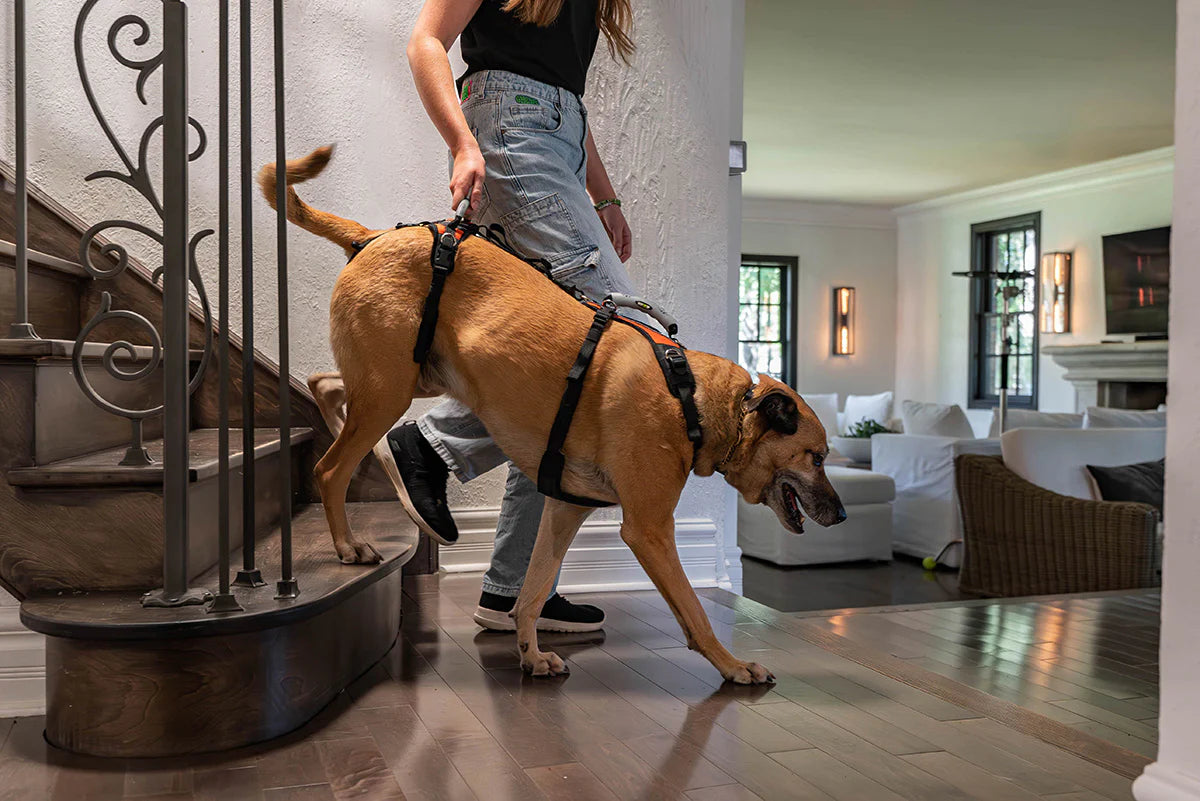
The good news is that many physically disabled dogs can get back on their feet with the help of a mobility aid. If your canine companion is dealing with limb weakness, a dog harness can make it much easier to help him get up stairs or into the car.
And if your dog would benefit from a little more help moving around, a wheelchair for back legs or a full support cart could be exactly what your pup needs to reclaim his independence.
Exercise Together
Disabled dogs still need exercise. Many of them want to frolic and play but aren’t able to, whether because of an illness like degenerative myelopathy or a birth defect—so you’ll just have to find an activity that works for them.
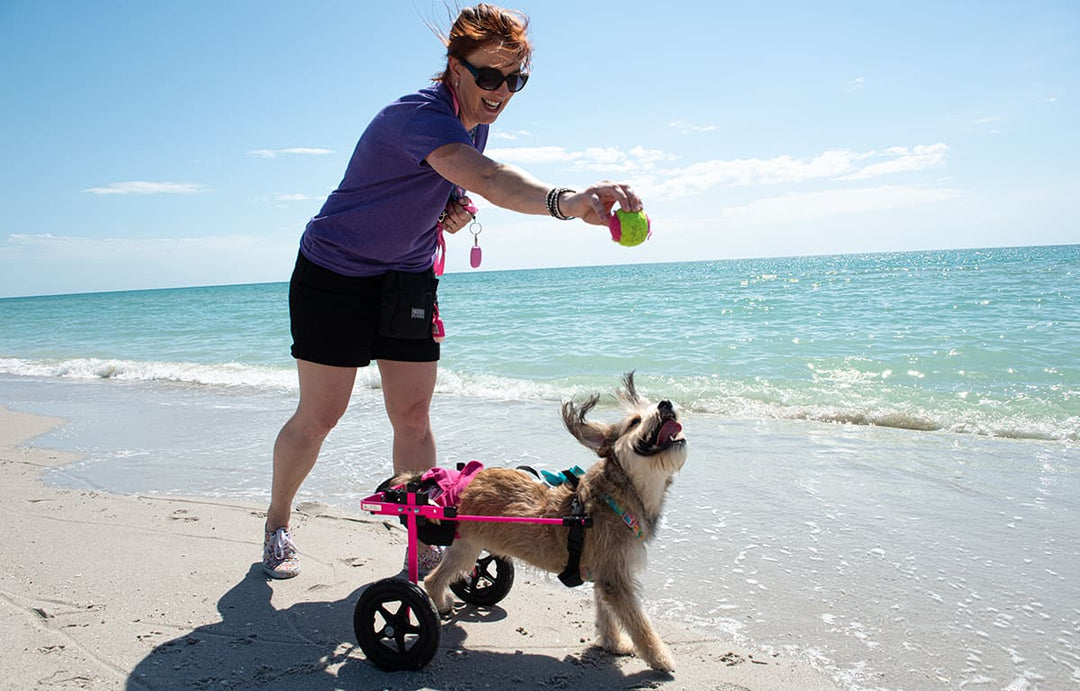
For a dog with limited mobility, that might mean taking a much shorter walk or even checking out a dog swimming pool. Whatever type of exercise you choose, make sure that your dog is comfortably able to accomplish it and seems to enjoy the activity.
Maintain Hygiene
You might have some experience with brushing your dog’s teeth, but a disabled dog will likely require more help with hygiene. If your pup is too stiff or otherwise unable to clean himself, for example, you might trim long fur that could become soiled. (If you’re not up to the task, make an appointment with a professional dog groomer!)
And don’t underestimate the benefits of a good brushing—not only will it collect that loose hair that would otherwise carpet your floors, but it will also keep knots and mats from developing, ensuring your dog’s coat stays shiny and healthy.
Do a Daily Check
Disabled dogs may lose feeling in paralyzed limbs and will not feel pain when injured there. That means that your canine companion won’t be whining or limping to clue you in to the fact that she’s hurt. Check your dog at least once a day for any injuries. A daily check is a good idea for dogs with other disabilities, as well.
If your dog goes blind, for instance, she may have trouble navigating a home that was once familiar. She may also lose track of her food and water bowls. Stick close by her until you see her adapting to her lack of sight, and make sure she’s able to find her meals to get the nutrition she needs.
Adapt Training to the Disability
They say even old dogs can learn new tricks—and we say that disabled dogs can, too! In fact, training can be an enriching activity that keeps your pup engaged and happy. But you’ll most likely have to alter your training to fit his unique needs.
If your dog is losing hearing, for example, this is a great time to begin to teach or solidify hand signals. And if a dog is having trouble getting used to his new dog wheelchair, spend some time praising him and helping him get used to the idea of moving around on wheels.
Be Patient
Be patient with your dog, who may be adapting to a new way of life, but also remember to be patient with yourself! Your pup may still be energetic, and it can hurt to see her losing her eyesight or developing other complications while still wanting to play. But a few easy changes and extra precautions can make a world of difference in her health and happiness, so take your time and enjoy life with your special dog.
Keep Your Dog Moving with K9 Carts
At K9 Carts, we believe that every dog deserves the best possible care and quality of life. That means that we’ll be right beside you, working hard to restore your dog’s mobility. We’ve spent years designing and building dog wheelchairs that help dogs recover from surgery, stabilize their spines, and give them the ability to walk again. Reach out today —we can’t wait to get started on your pup’s customized cart!
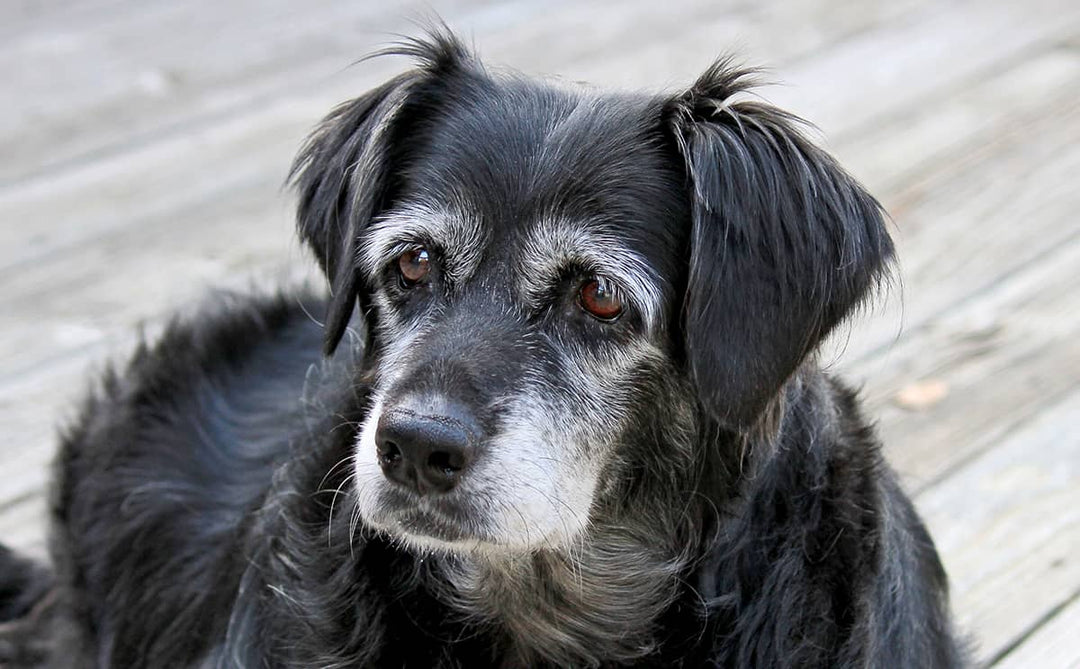
5 Things You Might Find Surprising About Senior Dogs
We love senior dogs—with their gray muzzles and mellow moods, they make the perfect companions for both families with young children and people living alone. But at what age is a dog actually considered a senior? And is it true that you really can’t teach an old dog new tricks? We’ve got the answers.
At K9 Carts, we’re dedicated to helping you ensure your dog maintains a high quality of life no matter his age or range of motion, and part of that means acting as an information resource for pet parents! Here are a few little-known facts about our older furry friends.
1. A Set “Senior” Age Doesn’t Exist
There’s no hard and fast rule that can tell you at what age your dog will become a senior, but as a general guideline, a dog might be considered a senior around age 7 or 8. In reality, the “senior” designation depends more on your dog’s physical state than on his actual age. And research shows that dogs actually mature at different rates, depending on their size and breed.
That means that a 10-year-old Miniature Pinscher is about 56 in “human years,” while a Great Dane of the same age is closer to 66! The best thing you can do for your aging companion is to keep an eye on him and consult your vet to determine when it’s time to begin treating him as a senior.
2. Older Pups Still Need Stimulation
Older dogs might seem more mellow than their yappier puppy selves, but that doesn’t mean that they’ll all be content lounging around day in and day out! Our old friends still need plenty of affection, exercise, and mental stimulation. The only thing that will change as they grow is the nature of those activities.
You may find that your senior dog can’t walk long distances anymore—the solution may be to take more frequent short walks or to switch up your walking route entirely to provide new scents and environments she can explore happily. Treat toys are another great source of stimulation, particularly when you have to leave your canine home alone.
If your dog is particularly motivated by food, she could spend hours working at a puzzle toy or coaxing licks of peanut butter from a Kong! Just be sure that anything you purchase is safe for her senior self, with no sharp edges or hard surfaces that could hurt her teeth.
3. Their Mobility Issues Are Manageable
Even a perfectly healthy dog may begin to move more stiffly as he ages. Others will develop health issues like degenerative myelopathy that make walking difficult or impossible. This may seem like the end of the road for older dogs, but it doesn’t have to be! There are ways to help your old dog keep moving around and maintain his independence.
For dogs suffering from arthritis or other milder mobility issues, pet parents can adjust their homes to better fit their canine’s needs. That might involve building him a ramp or a few short steps to help him get back up on the couch and putting rugs down to create a safe, non-slip path over any hard flooring. Dogs experiencing limb weakness, partial paralysis, or who are recovering from surgery can benefit from a mobility aid like a customized dog wheelchair or handheld sling.
4. You Can Teach an Old Dog New Tricks
Always wanted your canine to ring a bell when he needs to go outside? Wish you had taught her to roll over when she was a puppy? You’ve probably heard that old saying, “You can’t teach an old dog new tricks,” and despaired, but that adage couldn’t be further from the truth!
In fact, older dogs can learn new habits and tricks—it just might take them a bit longer than young dogs. But they are able to focus for longer periods than puppies, meaning that training sessions can go on and be more productive. So pull out the treats and get practicing, because your options are limited only to what your dog can comfortably accomplish!
5. Aging Dogs Are Less Likely to Get Adopted
The ones that end up in shelters may have had a rough life. But they still have plenty of love left to give. Puppies get snatched up fairly quickly, while older dogs sometimes fall by the wayside. It takes a special kind of love and commitment to adopt an older dog, knowing that you may only have a few years with them, some of which may be shadowed by health issues.
Helping Old Dogs Walk Again with K9 Carts
It can be disheartening to watch your older pup slowly lose the ability to run and play. The good news is that K9 Carts has leveraged decades of veterinary experience to create customized dog wheelchairs that can get your canine companion moving again.
Our dog wheelchair for back legs provides stability and support for dogs with rear limb weakness, while our full support cart is ideal for canines experiencing complete limb weakness. And you’re not limited to one or the other—our rear support cart can be converted into a full support wheelchair with a simple kit, allowing you to provide more support as your dog ages.
We’re all about keeping your dog happy, healthy, and by your side for as long as possible, and we can’t wait to chat about how we can help your old friend regain some mobility. Reach out today!

3 Common Mobility Issues in Cats and How to Address Them
How many times have you been minding your own business, reading a book or walking down the hall only to be pounced on by your mischievous cat?
Though domesticated, these animals are still hunters at heart, and movement is essential to their quality of life. Though we wish our feline companions could stay sprightly and in perfect physical condition for their entire lives, diseases, traumatic injury, and other health issues can slow them down and making moving around difficult or even painful.
To further complicate things, cats don’t like to show weakness. They may hide the fact that they’re in pain, or just slowly start losing interest in the activities that once stimulated them. It’s up to pet parents to keep a close eye on our furry friends, always on the lookout for potential health issues that could impact a cat’s ability to move.
We’re all about keeping pets mobile and empowering pet owners to take stellar care of their animals here at K9 Carts. Here are some common mobility issues that may affect your kitty in the future, as well as some tips for keeping him or her moving.
Mobility Issues and Health Conditions
1. Arthritis
As cats age, the cartilage between their bones breaks down, which can lead to health issues like arthritis, a degenerative joint disease. The condition tends to affect the elbow joint but can cause pain and inflammation in other joints as well. You may notice an arthritic cat moving stiffly, appearing lame, or hesitating to run or jump.
2. Obesity
Some people might think a chubby cat is “cute,” but that extra fat can be dangerous! Obese cats have a harder time staying active, moving around, and even cleaning themselves. Additionally, the extra strain put on their joints can cause further health issues. If you notice your cat looking heavier than normal and refusing to move much, visit your veterinarian for a checkup. While the cause of the weight gain is probably just overfeeding, your vet will want to eliminate the possibility of a thyroid issue.
3. Fractured Back
A cat’s spine is made up of dozens of bones that keep the all-important spinal cord safe. Injury to these bones can put pressure on the spinal cord, resulting in pain, incontinence, and even paralysis. This type of injury usually results from trauma such as being hit by a car, falling from a high point, or being bitten by a dog. If you think your cat has suffered a back or spine injury, get medical attention as quickly as possible. But take care transporting your cat—jostling the injury too much can cause more damage.
Addressing Mobility Issues in Cats
Keep Up Preventative Care
Keep your cat in great physical condition by feeding her a healthy diet, keeping her nails trimmed, and offering plenty of affection and stimulation! And instead of addressing problems as they occur, take her to a veterinarian for regular checkups to catch health issues before they begin to affect your kitty’s daily life. While you’re better positioned to notice changes in your cat’s day-to-day behavior, your vet will be able to identify health problems such as cancer that aren’t outwardly obvious.
Make Your Home Accessible
If you notice your senior cat moving more slowly or struggling to leap up to places she once reached with ease, it’s time to make a few small changes around the house. These additions will depend entirely on your cat’s personal preferences and physical needs, so don’t go ripping up your floorboards before you take stock of what will actually benefit her most!
A cat who loves to lounge on the couch with you, for example, might enjoy a short ramp or step that makes it easier for him to get up there without jumping. You can also make life easier on an arthritic cat by covering your hardwood or tile floors with an area rug or runner to help him get around the house safely. Consider also providing your feline friend with a litter box with lower sides to make doing his business easier and more comfortable.
Introduce a Cat Wheelchair
Some mobility issues can be managed and even mitigated with the help of a cat wheelchair or other mobility aid. Cats living with a fractured back, cerebellar hypoplasia, arthritis, old age, front or rear amputation, or disc disease are great candidates for a customized cart.
We designed our cat wheelchair with an ultra-light frame made just for our feline friends. With an adjustable support system, each wheelchair is guaranteed to fit the recipient, helping to stabilize the animal, relieve stress on the spine, and get him or her moving again. Our carts are also great tools for cats needing post-surgical rehabilitation for disc, knee, and hip surgery!
Get Your Pet Rolling with K9 Carts
It can be stressful to take responsibility for an animal, even a perfectly healthy one. Watching that beloved cat or dog lose mobility can leave a pet owner feeling helpless and heartbroken. We’re here to give your pet a new lease on life!
At K9 Carts, we’re proud to offer customized pet wheelchairs built for a variety of companion animals. Give us a call today to learn more about how we can help your pet regain mobility and quality of life.
Doggie Wheelchair Success Stories: Daisy Mei and Joseph
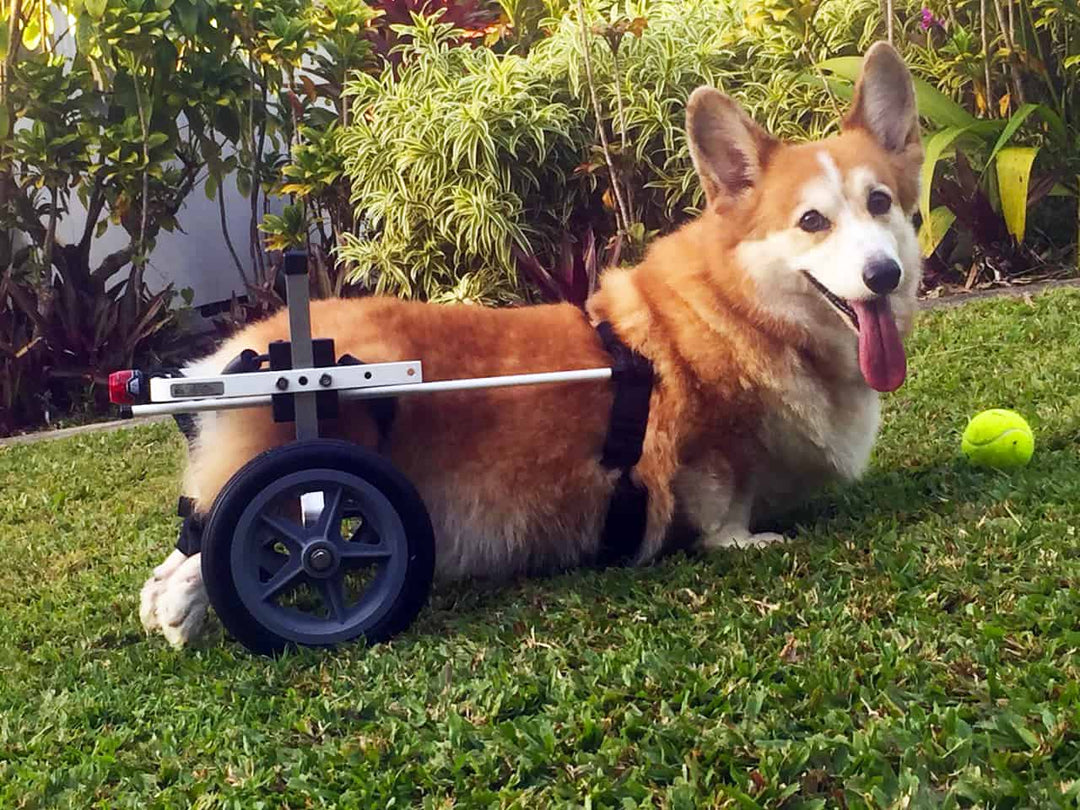
We’re back with another success story! Here at K9 Carts, we channel our passion for pets into creating customized carts that allow dogs, cats, and even chickens to regain mobility and improve their quality of life. Every pet is unique, and we relish the chance to get to know each individual case and create a cart that serves that animal well. Degenerative myelopathy (DM) is a progressive disease of the spinal cord that generally affects older Pembroke Welsh Corgis, German Shepherds, and Boxers. As the spinal cord degenerates, the dog begins to experience hind limb weakness and eventually loses the use of his or her rear limbs. Today, we’re taking a look at two special dogs that were affected by this disease. They have since passed away, but their story serves as an important reminder that paralyzed canines are perfectly capable of living happy lives.
Daisy Mei and Joseph
If you’ve ever met a Pembroke Welsh Corgi, you know that they’re some of the friendliest, spunkiest dogs around. Their long torsos, stubby legs, and short tails give them an adorable, perpetually enthusiastic look. Daisy Mei and Joseph were perfect, fun-loving examples of the breed. “Daisy Mei ruled the land and all the tennis balls,” said pet parent Allen C. Johnson, M.D. “Joseph’s domain was the water. Daisy hated to swim. Joseph loved it. He would throw himself into the pool to get the tennis ball, and he was a powerful swimmer.” The pair enjoyed daily walks by the seashore and plenty of attention from visiting tourists. Unfortunately, Corgis are also predisposed to developing degenerative myelopathy, and Daisy Mei began to show signs of DM in 2013. While her right hind leg remained very strong, her left hind leg grew weak. This manifested as a gait disturbance, which resulted in injuries to her left rear foot. In September 2017, Allen noticed the first signs of Joseph’s DM: when Joseph dove into the pool, his stronger hind leg flipped him over, and he sank. “This scared him so much that he never wanted to go into the water again, even with a doggie life vest,” said Allen. And as Joseph weakened, he became less interested in life. “I took him to the beachfront every morning of his life, but he would only want to walk as little as necessary for his potty needs, then just go home,” Allen said.
Getting the Corgis Back on Their Feet with Custom Dog Wheelchairs
After the onset of Daisy Mei’s DM in 2013, Allen took to the internet to research his options. That’s where he came across K9 Carts. Upon hearing of Daisy Mei’s condition, we got right to work designing and building a dog wheelchair for back legs that would give her the support she needed. “Daisy Mei took to the cart right away,” Allen said. “She was faster in her cart than Joseph was on four legs. She could even get it off the ground to jump for the tennis ball.” Daisy Mei enjoyed romps on the beach in her cart for the next two years. And, when Joseph’s diagnosis came, Allen knew exactly where to turn. While it doesn’t take long for most dogs to get used to the cart, Joseph needed a little extra time. “When we first tried it, he planted his feet and refused to move,” said Allen. Joseph’s hind legs grew weaker, and when Allen brought out the cart again, the little dog was ready for it. “The next time I introduced the cart, he took to it right away and grew completely dependent on it for the last year of his life.” With the help of a dog wheelchair, Daisy Mei and Joseph were once again able to enjoy their morning walks on the beach. Joseph even had a bicycle light affixed to his cart for safer evening walks. “Joseph soon realized he was even more of a tourist magnet in his cart,” said Allen. “When he noticed someone approaching who looked like a good prospect, he would turn and bark at me. That was the sign to get a tennis ball out of my bag and throw it so he could show off for the crowd.”
Creating a Unique Cart
Because every dog is different, each of our carts is also different. We’re always learning new things and coming up with creative solutions as pet parents take their newly-mobile dogs on varied adventures. Daisy Mei was a smaller Corgi, so our 6-inch wheels were the perfect fit for her custom cart—but they became a special issue when the ocean came into play. “On her morning walk at the beach, she did not hesitate to head straight for the water, climb the rocks, and settle down in a tide pool,” said Allen. He eventually worked out a system of drilling a hole into the hub and spraying in WD-40 after each walk to keep the wheels from degrading, but he still found himself replacing quite a few wheels as Daisy Mei continued to splash about in the water. When Joseph was on his second set of 6-inch wheels, Allen consulted with Glenn, General Manager of K9 Carts. “He made up a super cool looking set of 8-inch wheels with stainless steel hardware,” said Allen. “Joseph was very proud of them, and they lasted the rest of his life.” Allen credits K9 Carts with helping both of his Corgis regain their mobility and interest in life. “The cart kept them mobile and happy, and that made our lives so much better. Without a cart, they would have been miserable and died at least a year sooner,” he said. “The K9 Cart is an elegantly simple device that performs miracles; it keeps animals alive.”
Pet Wheelchairs for Animals Big and Small
Whether your furry friend is suffering from degenerative myelopathy or in need of surgical rehabilitation, we’re here to help! As the experts in pet mobility, we’ve spent years researching, designing, and building customized pet wheelchairs that give animals a new lease on life. We’d love to help you get your pet back on his or her feet again—give us a call today to learn more about our carts and other mobility aids.
Giving Your Kitty a New Lease on Life with a Cat Wheelchair
You’ve probably spent many an evening teasing your kitty with a feathered toy or watching her pounce on a crinkly fabric mouse. Despite the fact that you feed them and provide for their needs, cats are still hunters at heart. And even though they sleep for about 15 hours a day, they love to play. But what happens when they’re no longer able to romp around?
Our feline friends are valued for their adventurous spirit and playful nature, but mobility issues can rob them of their ability to explore and move around. This loss of independence may cause your cat to lose interest in the world around her. She may even grow depressed and begin to refuse food, leaving you faced with a potentially difficult decision. Is there any way to prolong a sick cat’s life in a way that ensures she’s happy?
At K9 Carts, we’re committed to providing high-quality mobility tools and resources that allow pet owners to help their disabled cat or dog. The more information you have, the better prepared you’ll be to address your cat’s unique condition and special needs. Let’s talk about what we mean by “quality of life” and how customized pet wheelchairs can improve that quality for your cat.
What is Quality of Life?
The term is tossed around quite a bit in regards to animals, but what does it actually mean? Is it a black-and-white “good” versus “bad” determination? Or is it more of a sliding scale? And how on earth is a pet parent supposed to know exactly how their pets are feeling when they can’t open their mouths to tell us?
Essentially, “quality of life” refers to a creature’s everyday wellbeing and ability to survive. Your cat has a high quality of life if she is well-fed, has no health issues, engages in regular exercise, and receives attention. She’s happy and living life to the fullest! A cat that has a poor quality of life is in continuous pain, suffering from a health issue that is making it difficult for him to function, and having trouble engaging in play, using the bathroom, or eating.
Mobility Issues in Cats that Affect Quality of Life
A wide range of diseases, injuries, and other health conditions can cause mobility loss in cats—that’s one reason that you should always seek veterinary care if your cat is suddenly having trouble moving. Here are some health issues and diseases that may cause mobility loss in cats:
Arthritis
Obesity
Fractured back
Diabetes
Ingrown nail
Cerebellar hypoplasia
Front or rear amputation
Disc disease
Old age
Post-surgical rehabilitation
Because these conditions are so varied, so are the available treatments. In some cases, comprehensive treatment can get your cat back in peak physical condition. But in others, your cat may experience permanent mobility loss and other irreversible consequences. An ingrown nail, for example, can be addressed and rectified, allowing your cat to regain her footing and return to her normal routine. Others, like degenerative disc disease, may only worsen.
Regaining Mobility with a Cat Wheelchair
If your cat appears to be unhappy, don’t give up hope. Her poor quality of life may be caused almost exclusively by her inability to move. If that’s the case, restoring her range of motion can also improve her overall quality of life, perking her up and allowing her to thrive despite her health issues.
First, seek input from your vet, who can evaluate your cat’s condition from a medical standpoint. Depending on your kitty’s overall health and current prognosis, she may be a good candidate for a customized cart.
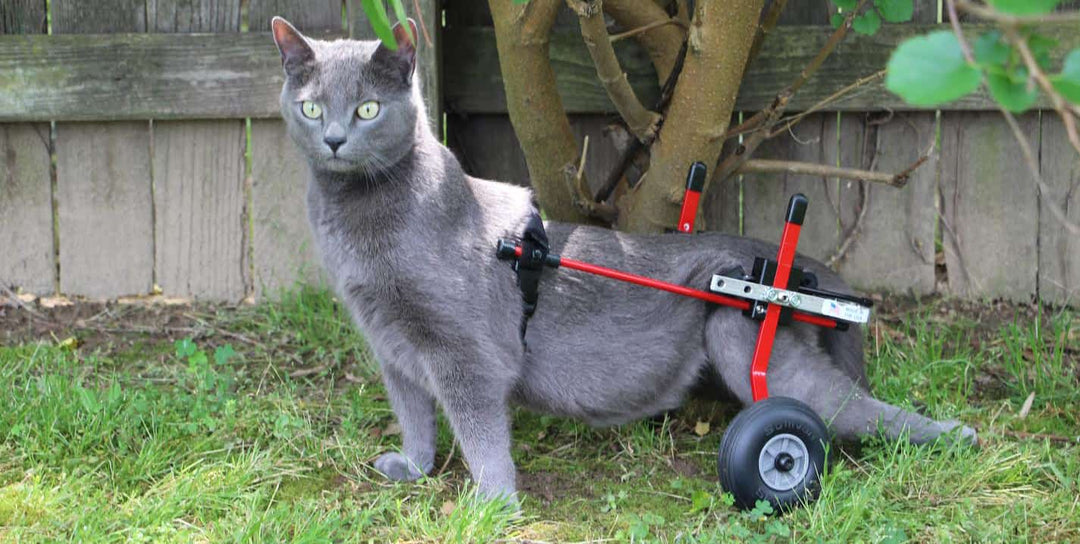
A cat wheelchair can get disabled or elderly felines moving again by providing needed support to their weakened limbs. At K9 Carts, we can create a customized cat wheelchair for back legs or for complete support, allowing your feline friend to regain her range of motion, independence, and quality of life.
Each of our cat wheelchairs is built to balance easily on your cat without putting any pressure on his shoulders or front legs. Not only is this lightweight frame ideal for cats with limb weakness, but it’s also an excellent option for post-surgical rehabilitation, older, arthritic cats, and cats who cannot safely receive an operation.
Feline Mobility Aids from K9 Carts
Here at K9 Carts, we’re passionate about pet health. We believe that every animal deserves a high quality of life, and we’ve poured years of veterinary research into our customized pet wheelchairs to help add to that quality. We’re proud to design, manufacture, and custom fit the only wheelchair designed just for cats on the market today.
Along with our high-quality products, we offer unbeatable staff support to ensure that your cat gets the very best fit. If your kitty needs some help getting back on his feet, give us a call today.
Doggie Wheelchair Success Stories: Sammi
Here at K9 Carts, we like to measure our success in happy pets. We’ve been helping special needs animals regain quality of life since 1961, and we’re not slowing down any time soon!
Our custom wheelchairs for dogs and other pets get furry and feathery friends moving again, providing an increased range of motion to animals experiencing limb weakness, paralysis, and other conditions that affect their ability to move.
We talk a lot about breed-specific health problems and diseases like degenerative myelopathy—after all, these are the issues that our dog wheelchairs address—but these medical conditions can make the world of canine health seem like a gloomy place. In reality, that couldn’t be further from the truth!
Exciting advancements in medicine and our very own personalized carts are paving the way for happier, healthier pets the world over. Today, we’re highlighting one of those success stories. Sammi the Shih Tzu
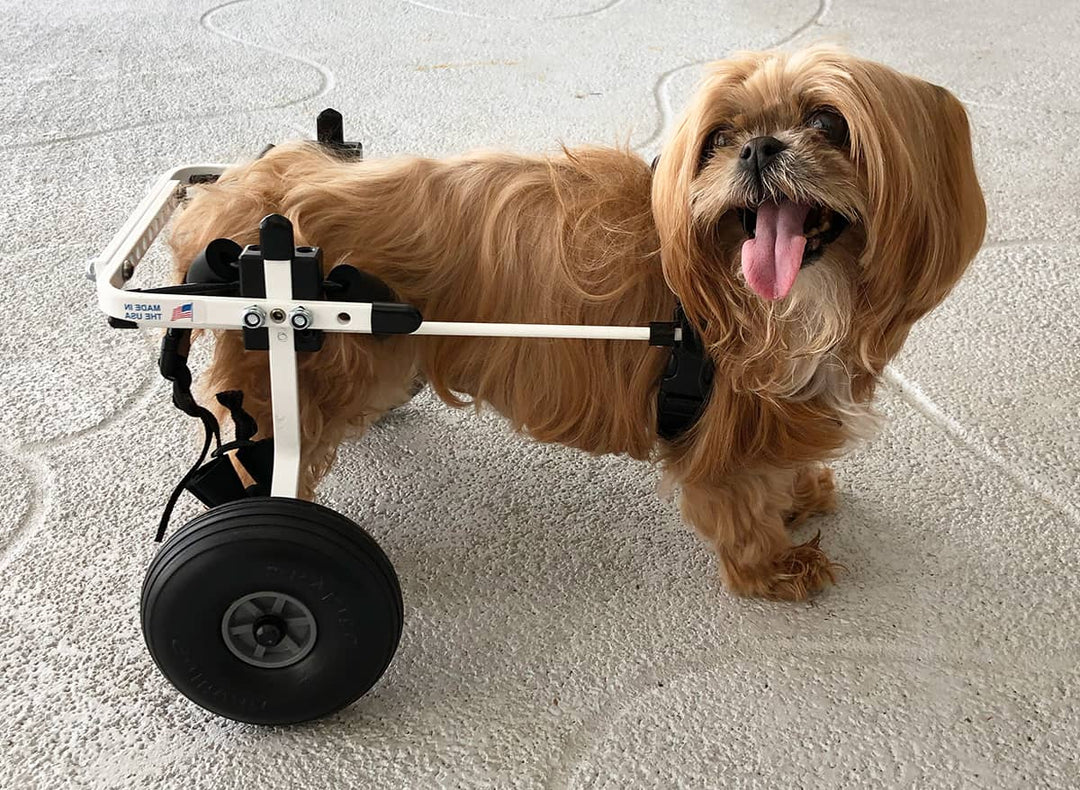
Meet Sammi, a 15-year-old Shih Tzu weighing just 7.6 pounds. His pet parents, Raymond and Nancy Crampton, said he’s always been friendly, playful, and active. But when he was diagnosed with a curved spine, his back legs became very weak, and he began to get around by using just his front legs to move himself.
Though he loves to go for walks, Sammi’s condition made it impossible for him to enjoy the outdoors, and he went months without being able to frolic and romp around. Eventually, his back half dragged on the ground behind him wherever he went. Animals losing the use of their back legs tend to “crawl” around by using their front limbs, but this way of moving risks injuring a dog’s spine and back paws.
A mobility aid seemed like Sammi’s best bet. Sammi’s veterinarian told the Cramptons about his own dog, who suffered from the same problem as the little Shih Tzu. The vet had found a solution in the form of K9 Carts, which provided a customized dog wheelchair for back legs that enabled his pup to regain some range of motion. The Cramptons were impressed by the vet’s demonstration of the cart and reached out to us. They were connected to our customer support, and our design experts got started building Sammi’s new wheels soon after!
Because no two dogs are alike, we make sure to customize each of our dog wheelchairs for the best possible fit. We offer both rear and full-support carts to address a variety of conditions that affect mobility, such as hip dysplasia and arthritis. In Sammi’s case, his front legs were still strong—he just needed some rear support to help him get back on his feet! And because we begin designing and building a customized cart the same day we receive an order, he got it sooner rather than later.
Getting Sammi Moving with a Customized Dog Wheelchair
Some dogs need time to adjust to their new wheelchair, but not Sammi. “He loved it,” said his owners. “Within seconds of putting him in the cart, he was off riding around the house.” And even better—the Shih Tzu is once again able to enjoy walks! He’s now back to his friendly self, saying hello to everyone he meets. “He is so happy to have his new ride to get him moving again,” said the Cramptons.
Sammi is loving his newly regained independence, and his pet parents appreciate not having to carry him around everywhere. The little dog is learning to navigate life on wheels with confidence and is now able to get down off of curbs and turn corners in his cart without help. Sammi’s owners take his cart with them everywhere they go, whether they’re visiting a park, going for a walk, seeing friends, or just traveling. They’re pleased with its sturdy construction, light weight, and smooth roll, and count themselves lucky to have found K9 Carts right when Sammi needed help.
Improving Quality of Life with Pet Wheelchairs
Sammi’s story is just one of tens of thousands—that’s right, we’ve helped that many animals get moving again! But happy pets and pleased customers aren’t just feathers in our cap. Really, they’re evidence that we’re making a difference in the care of animals, helping special needs pets and the owners who love them enjoy more quality time together.
Not every pet is a good candidate for a cart, so take some time to consult your vet and evaluate your pet on your own to determine whether he or she might benefit from a pet wheelchair. We’re also happy to help you determine what kind of mobility aid your pet needs.
If you have a paralyzed dog or a cat with weak limbs, contact us today to find out more about how our custom made carts can get your pet up and moving again. We can’t wait to help you make your animal companion’s day!


